





Meet the People Who Make Ireland
The landscapes might bring you to Ireland. But the people you meet along the way are often the reason you remember it.
Ireland has some serious scenery.
The Atlantic crashing against the west coast. The wild, open landscapes of Connemara. The Cliffs of Moher rising above the sea. The lakes and mountains of County Kerry.
They’re places worth travelling for.
But spend a little longer here and you’ll realise that some of your favourite memories may have very little to do with what you came to photograph.
They might start with an oyster farmer in Connemara. A food producer in Galway. A local guide telling you the story behind the landscape you’re walking through. Or a conversation in a pub that lasts considerably longer than expected.
Because one of the best ways to experience Ireland authentically is through the people who call it home.
What is the best way to experience the real Ireland?
There isn’t one single “real Ireland”. Dublin, Connemara, Galway and County Kerry each have their own landscapes, traditions and character.
But if you want to go beyond sightseeing, spend time with the people who know these places best.
Walk with local guides. Meet food producers. Visit working farms. Listen to traditional music in local pubs. Ask questions and leave a little room in your itinerary for the conversations you didn’t plan.
It’s something we love building into our tailor-made holidays at High Point Holidays.
Here are just a few of the people and experiences that can bring an Irish journey to life.
Start in Galway, and come hungry
Galway is a very good place to start discovering Ireland through its food.
A local food tour can take you through the city to discover some of the people behind its growing culinary reputation, from traditional family businesses and cheesemakers to artisan producers and a younger generation of food entrepreneurs.
And there’s plenty to taste along the way.
Oysters, cheese, crab, local beer, artisan chocolate and sweet treats can all be part of the experience.
But the real interest isn’t simply eating your way around Galway, tempting though that may be.
Meeting the people producing and serving the food gives you a different understanding of the city and its relationship with the Atlantic coast surrounding it.
Our advice? Arrive hungry.
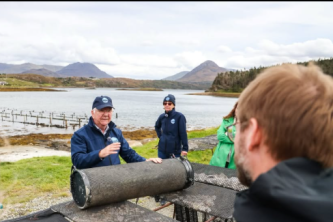
Meet the oyster farmers of Connemara
Travel west from Galway into Connemara and the relationship between food and landscape becomes even more obvious.
Here, you can visit a working oyster farm and discover what goes into producing something that usually arrives rather anonymously on a restaurant plate.
The experience follows the oyster from seed to plate. Depending on what’s happening on the farm that day, you might see the team grading and packing oysters or working with the oyster bags in the bay.
You’ll also learn how to shuck one yourself.
And then comes the important bit.
The tasting.
Eating an oyster here, surrounded by the Atlantic landscape that produced it, is a very different experience from simply ordering one in a restaurant.
Suddenly there’s a person, a place and a story behind what you’re tasting.
And that connection between landscape, producer and food is exactly the sort of experience we look for when creating our journeys.
Walk the Cliffs of Moher with someone who knows their stories
The Cliffs of Moher need very little introduction.
They’re one of Ireland’s most famous landscapes, and with good reason.
But there’s a difference between seeing them and understanding the landscape you’re walking through.
Starting from Doolin, a guided hike with a local expert can take you along the cliffs while introducing the stories, viewpoints and details that many visitors simply pass by.
There are extraordinary views towards Doolin, the Aran Islands and across the Atlantic.
But there’s something else too: context.
That’s one of the reasons we love exploring with local guides.
A landscape becomes more than scenery when someone can tell you about the place you’re standing in, the people who have inhabited it and the stories that have shaped it.
Stay for the traditional Irish music
Then there’s the music.
Traditional Irish music is still very much part of the experience in places such as Galway, Doolin and Killarney.
And you don’t necessarily need an elaborate organised activity to enjoy it.
Sometimes, it’s simply a question of finding the right pub, ordering a drink and staying for a while.
Doolin is particularly well known for its traditional music scene, with sessions taking place in pubs and venues around the village. You might hear slow airs, lively jigs or traditional songs as part of an ordinary evening.
That’s why we’d recommend leaving a little space in your itinerary rather than planning every hour.
Find somewhere you like.
Stay for another song.
You never quite know how the evening will unfold.
Discover Killarney with a local Jarvey
Even travelling through Ireland’s landscapes can become an opportunity to connect with local culture.
In Killarney, for example, a traditional jaunting car journey can be combined with a cruise across the famous Lakes of Killarney.
Your local Jarvey Guide brings the landscape to life along the way through the area’s history, legends and folklore.
You’ll explore Killarney National Park, its mountains, lakes and woodland, with the possibility of spotting its native red deer too.
You could simply admire the landscape.
But hearing its stories from someone who knows it adds something more.
In Dublin, let someone tell you the city’s story
The same idea applies in Dublin.
It’s perfectly possible to walk around the city ticking off historic buildings and famous landmarks.
But explore with someone who knows the city and suddenly those streets begin to connect.
A private walking tour led by a local history graduate can introduce Dublin through its history and architecture, but also its literature, songwriters and people.
It’s an opportunity to ask questions, get local recommendations and understand some of the character behind the capital.
And if your preferred form of Irish storytelling comes in liquid form, Dublin has an answer for that too.
At Pearse Lyons Distillery, storytellers introduce visitors to both whiskey and the history of Dublin’s Liberties before concluding the experience with a tasting.
History and whiskey.
We can think of worse combinations.
Why are local experiences important when visiting Ireland?
Local experiences help connect the places you see with the culture, history and everyday life behind them.
Meeting an oyster producer explains why the Atlantic matters to the food on your plate.
Walking with a guide can reveal stories you’d never discover from the landscape alone.
Listening to music in a local pub introduces you to a tradition that’s still being shared rather than simply preserved for visitors.
It doesn’t mean every part of your holiday needs to become an organised “authentic experience”.
Quite the opposite.
Sometimes the most memorable encounter is simply the person you happen to get talking to along the way.
Leave room for the people you didn’t plan to meet
Perhaps that’s the part of Ireland we love most.
Not every meaningful encounter can, or should, be booked in advance.
It’s the person you get talking to in a pub.
The producer you ask one more question.
The guide who gives you a recommendation for somewhere completely different.
The conversation that begins with “Where are you from?” and somehow continues considerably longer than expected.
You can’t put those moments into an itinerary.
But you can create a journey that leaves enough room for them to happen.
Where should you go for authentic local experiences in Ireland?
The west and southwest of Ireland are particularly rewarding if you want to combine dramatic landscapes with food, music and local encounters.
Galway is a great starting point for food, live music and exploring Ireland’s Atlantic culture.
Connemara combines wild landscapes with smaller communities and experiences connected to the coast, including oyster farming.
Doolin and County Clare bring together coastal walking, traditional music and the Cliffs of Moher.
Killarney and County Kerry offer spectacular landscapes alongside local history, folklore and traditional experiences.
And Dublin adds another dimension through its history, literature, neighbourhoods, pubs and whiskey culture.
Together, they can form a fantastic journey through Ireland, but your itinerary doesn’t have to follow a fixed route.
That’s where tailor-made travel becomes particularly interesting.
How can you experience Ireland away from the crowds?
Going beyond the busiest sights doesn’t necessarily mean skipping Ireland’s famous places.
You can absolutely visit the Cliffs of Moher or explore Killarney National Park.
The difference is often in how you experience them.
Walk rather than simply stop for a photograph. Explore with a local guide. Spend time in the surrounding villages. Visit a producer. Stay overnight rather than moving immediately to the next attraction.
And don’t be afraid to slow down.
Ireland rewards curiosity.
Travel deeper in Ireland
At High Point Holidays, this is how we like to create our tailor-made holidays.
Of course, we want you to see Connemara, the Cliffs of Moher, Killarney and Ireland’s extraordinary Atlantic coastline.
But we’d also like you to taste an oyster where it was produced.
Hear the stories behind the landscape.
Listen to music in the places where it’s part of everyday life.
Meet some of the people behind the food you’re eating.
And leave enough time for a conversation you weren’t expecting.
Because you might travel to Ireland for the landscapes.
But there’s a good chance you’ll come home talking about the people.
Don’t just visit Ireland. Meet it.
Ready to discover Ireland differently?
Our Travel Experts can create a tailor-made Ireland journey around the places you want to see and the experiences that matter to you.
→ Explore our Ireland holidays
Frequently asked questions about experiencing Ireland like a local
What are some authentic experiences to have in Ireland?
Authentic experiences in Ireland can include exploring with a local guide, visiting food producers and working farms, listening to traditional music, discovering regional food and spending time in smaller towns and villages. In western Ireland, experiences such as meeting oyster farmers in Connemara, taking a food tour in Galway or walking the Cliffs of Moher with a guide can help connect the landscape with the people and traditions behind it.
Where can I experience traditional Irish culture?
Galway, Doolin, Connemara and County Kerry are excellent places to combine Irish landscapes with local culture. Galway and Doolin are particularly well known for traditional music, while Connemara offers opportunities to discover communities and producers connected to Ireland’s Atlantic coast. Killarney is a good base for exploring County Kerry’s landscapes, history and folklore.
Is Galway good for food lovers?
Yes. Galway has developed a strong food scene influenced by its location on Ireland’s Atlantic coast. Food tours can introduce visitors to local and artisan producers, with tastings ranging from oysters and cheese to seafood, beer and chocolate.
Can you visit an oyster farm in Ireland?
Yes. Oyster farm visits are available in parts of western Ireland, including Connemara. A farm experience can introduce you to the oyster-growing process from seed to plate, with opportunities to learn how oysters are graded, harvested and shucked before tasting them.
Where can I hear traditional Irish music?
Galway, Doolin and Killarney all have pubs and venues where traditional Irish music can be heard. Doolin in County Clare is particularly famous for its traditional music scene. Rather than planning every evening in advance, leaving some flexibility can give you the chance to discover local sessions while travelling.
Can High Point Holidays create a tailor-made trip to Ireland?
Yes. High Point Holidays creates tailor-made Ireland journeys according to travellers’ interests and preferred pace, combining accommodation, transport and activities with local experiences such as guided walks, food experiences and cultural encounters.